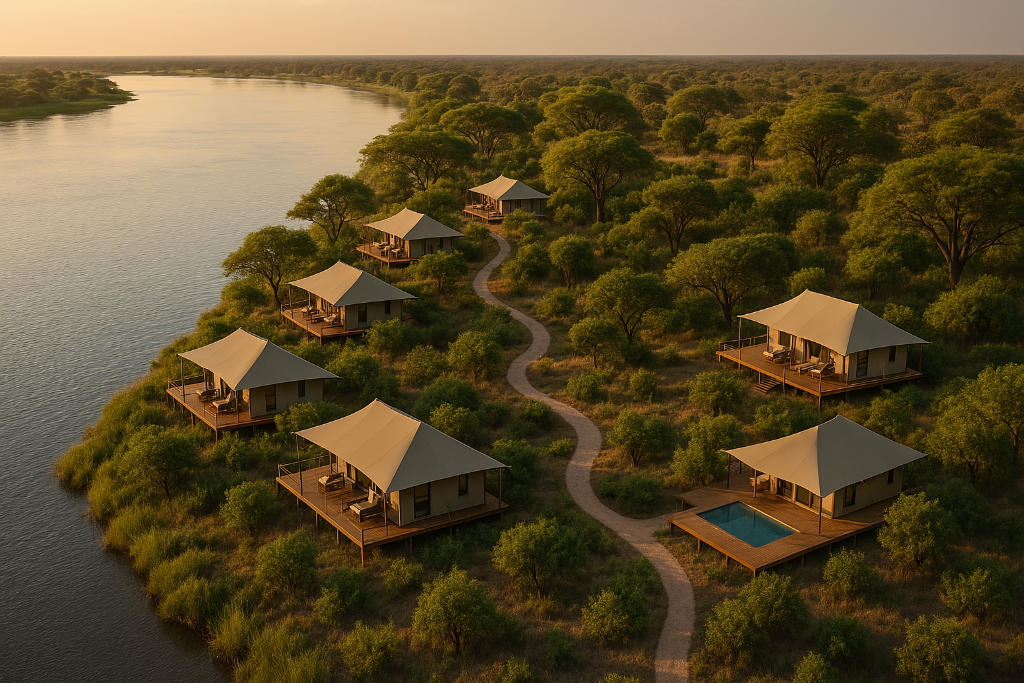
The Khwai region is one of the last strongholds for African wild dogs. Here, our head guide James Mosweu shares the story of Pack Seven — and what their survival means for the community that protects them.
A Dawn Unlike Any Other
I have been guiding in Khwai for eighteen years. I have watched leopards drag impala into fever trees, witnessed lions bring down buffalo twice their size, and sat in silence as elephant matriarchs led their families through floodwaters at midnight.
But nothing — nothing — compares to the moment a pack of African wild dogs gathers at dawn.
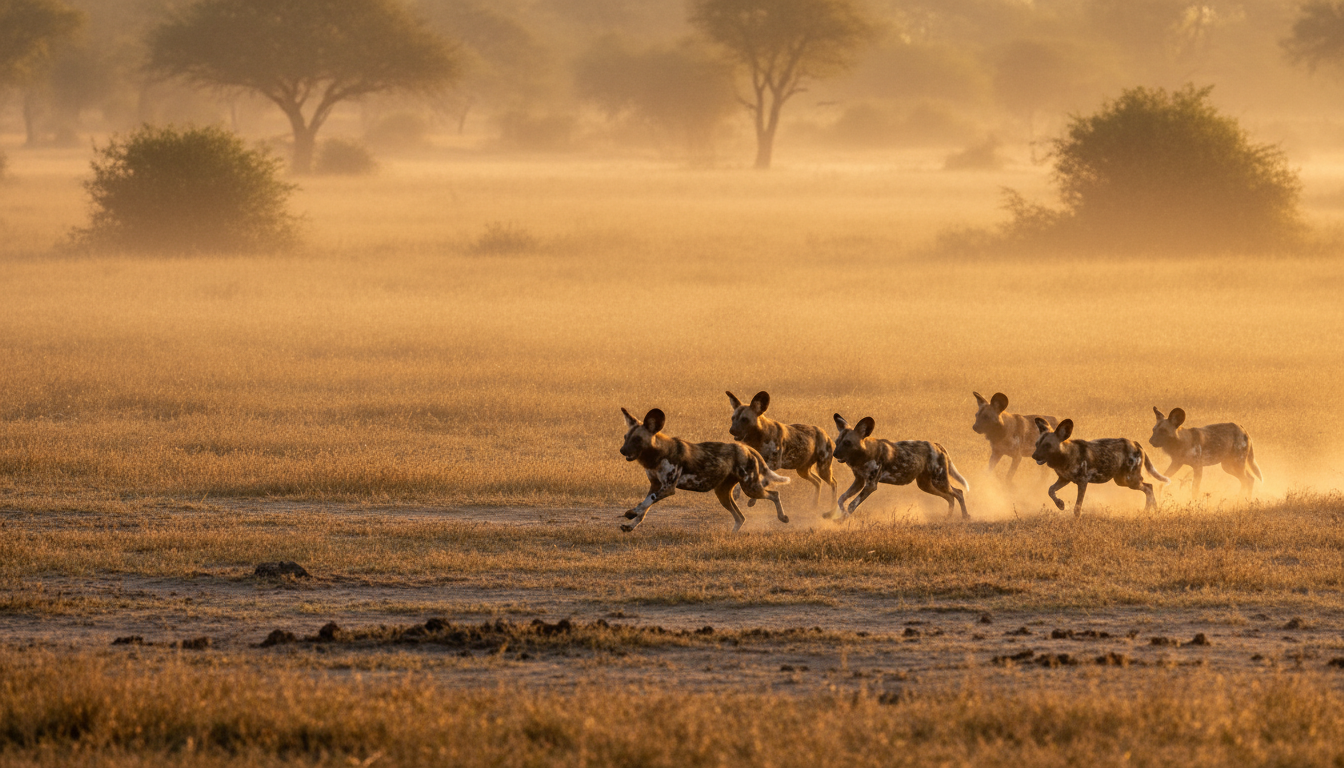
There is a sound they make before a hunt. A high, trembling chorus of chirps and whines, almost like excitement if excitement had edges. The pack checks on each other — nose to face, nose to face — and then, without ceremony, they move.
Pack Seven
We call them Pack Seven because they were the seventh pack we were able to habituate for vehicle observation on the Khwai concession. Fourteen adults and, this season, eleven pups — a number that represents one of the most successful births in the region in a decade.
African wild dogs (Lycaon pictus) are the most efficient hunters on the savanna. Their success rate is around 80% — compared to roughly 30% for lions. They hunt by endurance, chasing prey over kilometres until exhaustion sets in, communicating throughout with that extraordinary chittering call.
Yet there are fewer than 6,600 left in the wild.
What Threatens Them
The threats are interconnected and human-made: habitat fragmentation that breaks up the large territories packs require, road kills, snares set for other animals, and in some areas, direct persecution by farmers protecting livestock.
The Khwai Development Trust — the community that owns the concession Etela Khwai operates on — has been instrumental in changing this dynamic. Anti-poaching patrols funded by lodge revenues remove snares. Wildlife corridors are maintained. And perhaps most importantly, the community understands that a pack of wild dogs is worth far more alive than any alternative.
What You See from the Vehicle
Guests who are fortunate enough to witness a wild dog hunt describe it as the most exhilarating thing they have ever seen in Africa. The chaos is organised. The communication is constant. The outcome is almost inevitable.
And then, afterwards, the pups are fed first.
That detail — the pups fed first — tells you everything you need to know about why this species has survived at all.
James Mosweu has guided in the Khwai Community Area since 2008. He leads Etela Khwai's predator-specialist safari programme.
More from the Journal